
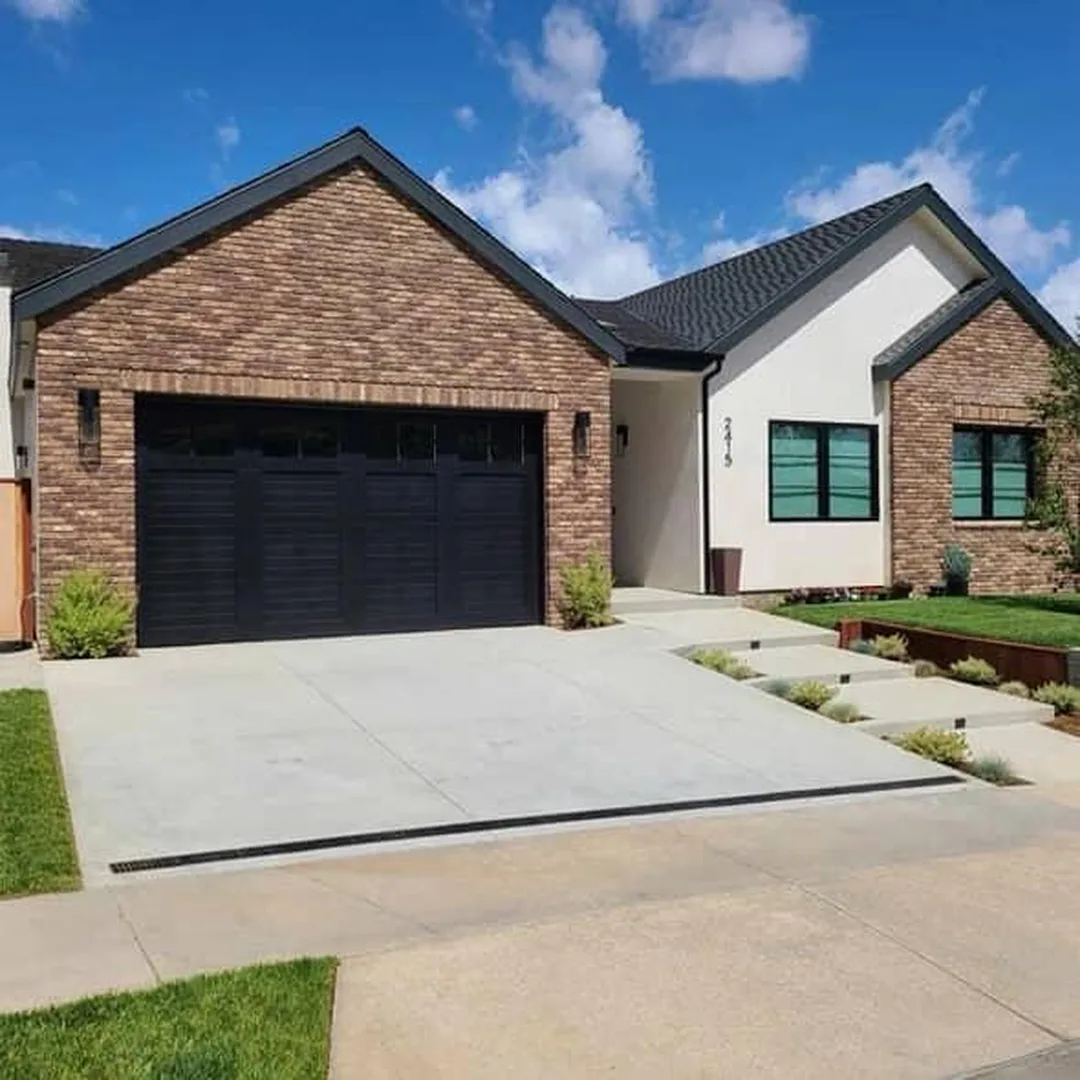
Fall gives coastal Orange County the steadiest painting weather of the year, and a steady surface is what lets paint cure properly and stay put. Mornings clear earlier than they do in summer, afternoons are warm without being harsh, and the rainy season has not arrived yet. It is also the last clean window to seal a house before winter weather tests it.
Here's the short version:
- September through November usually brings mild temperatures, drier air and little rain risk along the coast.
- Paint needs stable conditions to cure, and fall supplies them more consistently than summer or spring.
- A sealed, caulked exterior heading into the rainy season keeps water out of the walls.
- The summer rush is over, so scheduling is more flexible and the pace on site is less compressed.
- Whole house exteriors, smooth coat stucco conversions, decks and fences all suit a fall slot.
The Fall Weather Window on the Coast
Paint does not care about the calendar. It cares about surface temperature, air moisture and how long a coat has to set before conditions change. Fall near the beach tends to deliver all three in a workable range. Daytime warmth is moderate rather than baking, the air carries less moisture than it does during the heaviest marine layer stretches, and the dry run before winter storms gives a crew room to finish a house without stopping and restarting.
That matters most on stucco, which makes up the bulk of exterior surface on homes in Huntington Beach, Costa Mesa and the rest of coastal Orange County. Stucco is porous. It holds whatever moisture is in the air and in the wall, and a coating applied over damp stucco never bonds the way it should. A dry fall week lets the wall actually dry out after pressure washing, which is the entire point of washing first.
Why marine layer timing favors fall mornings
Summer mornings on the coast often start socked in. The fog sits late, surfaces stay damp, and a crew either waits or starts on a surface that is not ready. Fall mornings generally burn off sooner, which means more genuinely usable hours in a day, and fewer walls left half finished overnight.
Why cure time is the real argument
There is a difference between paint that is dry to the touch and paint that has cured. Drying is the solvent leaving. Curing is the film hardening into something that can shed salt air, resist chalking and flex with the wall. That process runs best when temperature and humidity stay inside a sensible band for the hours after application, not just the minute of application. Fall holds that band longer. For the longer view on coastal durability, the guide to the best exterior paint strategy for salt air and coastal sun covers how coating choice and prep work together.
Getting Ahead of the Rainy Season
The second argument for fall has nothing to do with how the paint looks and everything to do with what is behind it. Winter rain finds gaps. The usual suspects are the seams around windows and doors, the edges of trim and fascia, the joints where stucco or siding meet, and anywhere a pipe, vent or light fixture comes through the wall. Stucco cracks are a big one this close to the beach.
Painting in fall means those joints get opened, cleaned and sealed before water has a chance to work on them. Old dried caulk gets cut out rather than covered, because a fresh bead laid over a failed joint never bonds and it hides the moisture that is already getting in. Proper caulking, sealing and waterproofing is the part of an exterior repaint that pays off in January, not in October.
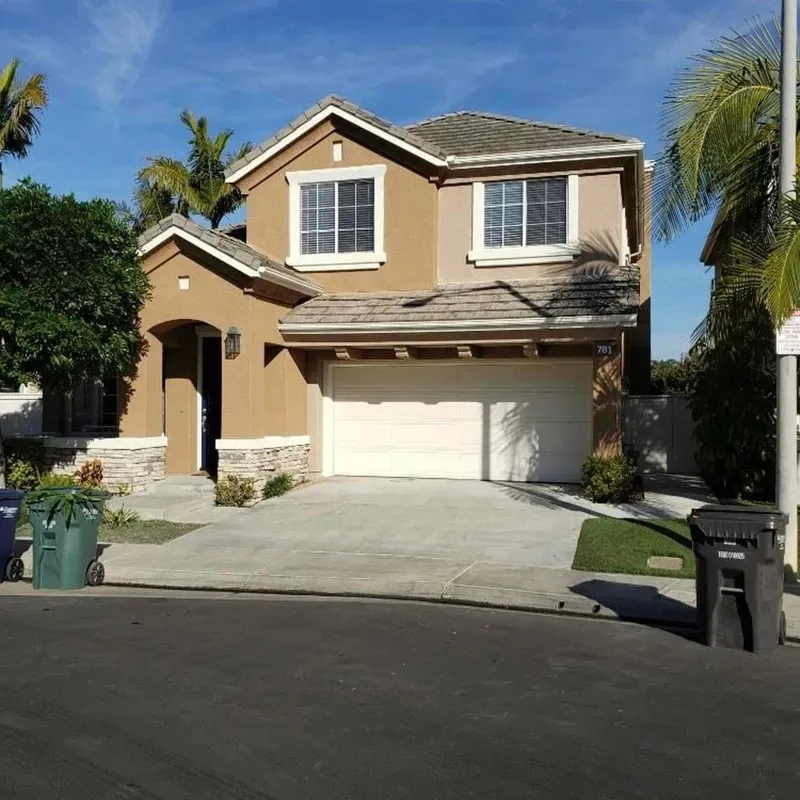
A coastal home exterior with stucco walls, fascia and trim, the surfaces an exterior repaint has to address together.
Fall Projects That Make the Most Sense
Some jobs benefit more than others from a long dry stretch.
| Project | Why fall suits it |
|---|---|
| Whole house exterior | Needs many consecutive dry days for wash, repair, prime and finish coats |
| Smooth coat stucco conversion | Skim and texture work has to dry fully before paint, which rain interrupts |
| Deck refinishing | Wood must be clean and dry before stain or paint will grip |
| Fence and gate work | Boards near the ground dry out in fall, and sealing them helps before winter |
| Fascia and trim replacement | Rotted wood comes out while the weather is stable, not mid storm |
A full exterior house painting job is really a sequence of dependent steps. Wash, let it dry, scrape, sand, repair wood, patch stucco, caulk, prime, then paint. Each step waits on the one before it. Rain in the middle does not just delay a day, it can send the crew back to re dry surfaces that were already ready. Fall reduces the number of those resets.
Decks and fences follow the same logic. Salt air, the marine layer and strong sun break a finish down fast when it sits on a dirty or rough surface, so deck painting and staining starts with deep cleaning and sanding out the gray. Sanded wood sitting under damp fog is not ready for stain. Sanded wood in dry fall air is.
Spring Versus Fall, Honestly
Spring is a reasonable time to paint. It is not a better time. Spring on the coast often carries leftover storm moisture in walls, more variable rain chances, and a heavier marine layer as the season progresses. It also lands right before the summer rush, when calendars tighten.
There is one honest point in spring's favor. If a home is already failing, waiting is the wrong call either way. Peeling paint, exposed bare wood, soft fascia and open stucco cracks get worse with every week of exposure, and prep cost rises along with the damage.
What can still go wrong in fall
An early storm can show up. A dense fog morning can push the start time. Shaded north facing eaves hold moisture longer than sunny walls. A professional plans around that by sequencing the house rather than treating it as one surface, watching the forecast before committing a finish coat, and making sure every wall is genuinely dry before priming.
Signs your home should not wait
- Paint chalks onto your hand when you rub the stucco
- Fascia or trim feels soft, or you can push a screwdriver into it
- Caulk joints around windows have split open
- Stucco cracks have widened, or paint is lifting from underneath
- There is already a water stain inside on a wall or ceiling
Any of those means water is getting in or about to. For what else to check before winter, the walkthrough on preparing your home exterior for the California rainy season pairs well with this one.
How Sharp's Painting Runs Fall Exteriors Across the Beach Cities
We are based in Huntington Beach and have painted here for over 27 years. Robert Sharp runs his own crew with no subcontractors, and he is on site every day, walking the work with the crew and with you. On a fall exterior that daily presence matters, because the calls about when a wall is dry enough are judgment calls someone has to make in person.
Robert evaluates the property, gives you a free color consultation and estimate, and leaves up to 10 free paint samples brushed onto your own stucco, siding or trim so you can judge them in morning and evening light. Rotted or split fascia gets cut out and replaced with new primed board rather than painted over. Stucco cracks get opened, patched and texture matched, and every joint gets caulked and primed before the first coat.
We work across Huntington Beach, Newport Beach, Irvine, Costa Mesa, Newport Coast, Seal Beach, Corona del Mar, Yorba Linda and Fullerton. There is no deposit and no upfront payment. You pay only when the job is done right. If you want a fall slot, tell us about your project and Robert will get back to you, or call (714) 610-5880.
FAQs
Is it too late to paint my exterior if we are already into October?
Usually not. October and November often hold good painting weather along the coast, and the work is scheduled with the forecast in mind. Robert can look at your house and tell you honestly whether the remaining window fits the scope of work you need.
What happens if it rains in the middle of my project?
The schedule flexes. Finish coats are not applied when rain is coming, and surfaces are allowed to dry fully before work resumes. You get an update in the morning and at the end of each day, so you always know where things stand.
Does painting in fall actually make the paint last longer?
Stable conditions during curing help the finish bond and harden properly. The bigger factor is still prep. Washing, scraping, sanding, wood and stucco repair, caulking and priming are what keep a coastal finish looking right years later.
Can you paint the house and refinish the deck and fence in the same visit?
Yes. One crew handles the whole property, so the exterior, deck, fence, gates and garage door can be sequenced together rather than booked as separate projects with separate crews.
How do I know if my stucco needs repair and not just paint?
Cracks, lifting paint and chalking are the visible signs, and moisture behind the wall is the cause more often than people expect. Robert checks the walls during the free estimate and tells you what has to be repaired so the paint is not just hiding a problem underneath.