
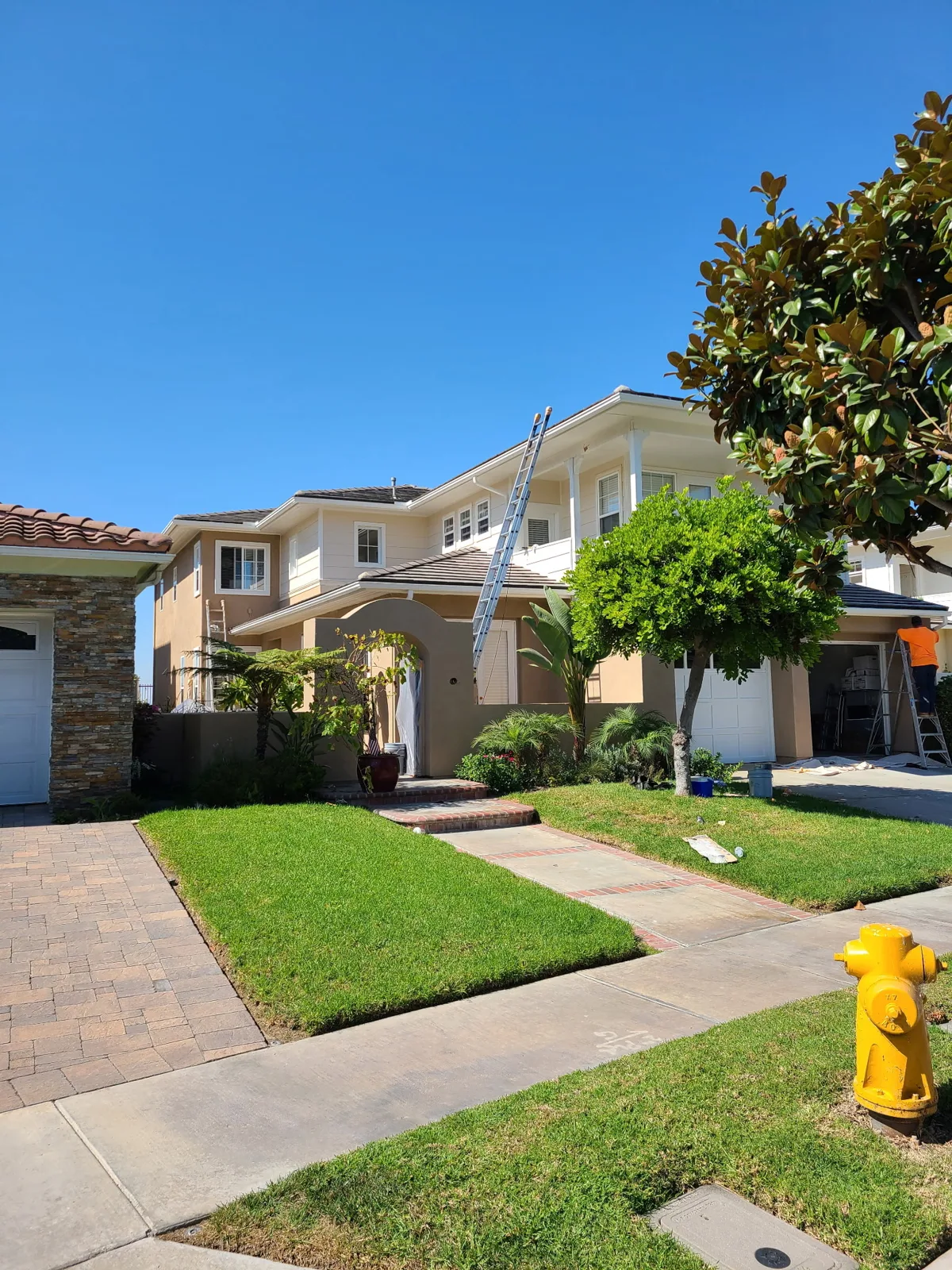
Getting an exterior repaint approved usually comes down to submitting the right form, with the right scheme numbers, before any paint is opened. Most Orange County planned communities publish an approved palette and ask owners to pick from it. The process is rarely difficult, but it does have an order to it, and skipping a step is what causes delays.
Here's the short version:
- Find your community's current color scheme document before you fall in love with a color.
- Submit an architectural application with your scheme choice, chips or samples, and the areas being painted.
- Build review time into the schedule so the crew is not waiting on a letter.
Why Architectural Committees Review Exterior Colors
Homeowner associations in planned communities keep exterior appearance consistent across the neighborhood. That is the whole purpose of an architectural review committee. It is not a design critique of your taste. The committee is checking that your proposed colors come from the approved list, that neighboring homes do not already use the same scheme, and that the scheme is applied to the right surfaces.
In practice, the committee looks at a small set of things. Which scheme you selected. Whether the body, trim, and accent colors are assigned the way the scheme intends. Whether anything else is changing at the same time, such as a new garage door color, a stained fence, or repainted stucco that was previously a different texture. If your repaint includes repair work that changes appearance, mention it. Committees dislike surprises more than they dislike bold colors.
Some communities also restrict how close your scheme can be to the homes on either side of you. That rule catches owners off guard more than any other, because a scheme can be fully approved in general and still be denied for your specific address.
Finding Your Community's Approved Palette
Start with the association management company or the community portal. The documents you want are usually titled something like architectural guidelines, exterior color schemes, or approved paint palette. Older communities sometimes keep a binder at the management office with physical chips, which is worth a visit because printed sheets and screens both misrepresent color.
Ask two questions when you request the documents. Is this the current version, and have any schemes been retired. Palettes get updated, and an owner working from an outdated sheet can submit a scheme that no longer exists.
If your community has no formal palette and only general language about colors being harmonious with the neighborhood, you still submit an application. In that case you are asking the committee to approve specific colors rather than a numbered scheme, and clear samples matter even more.
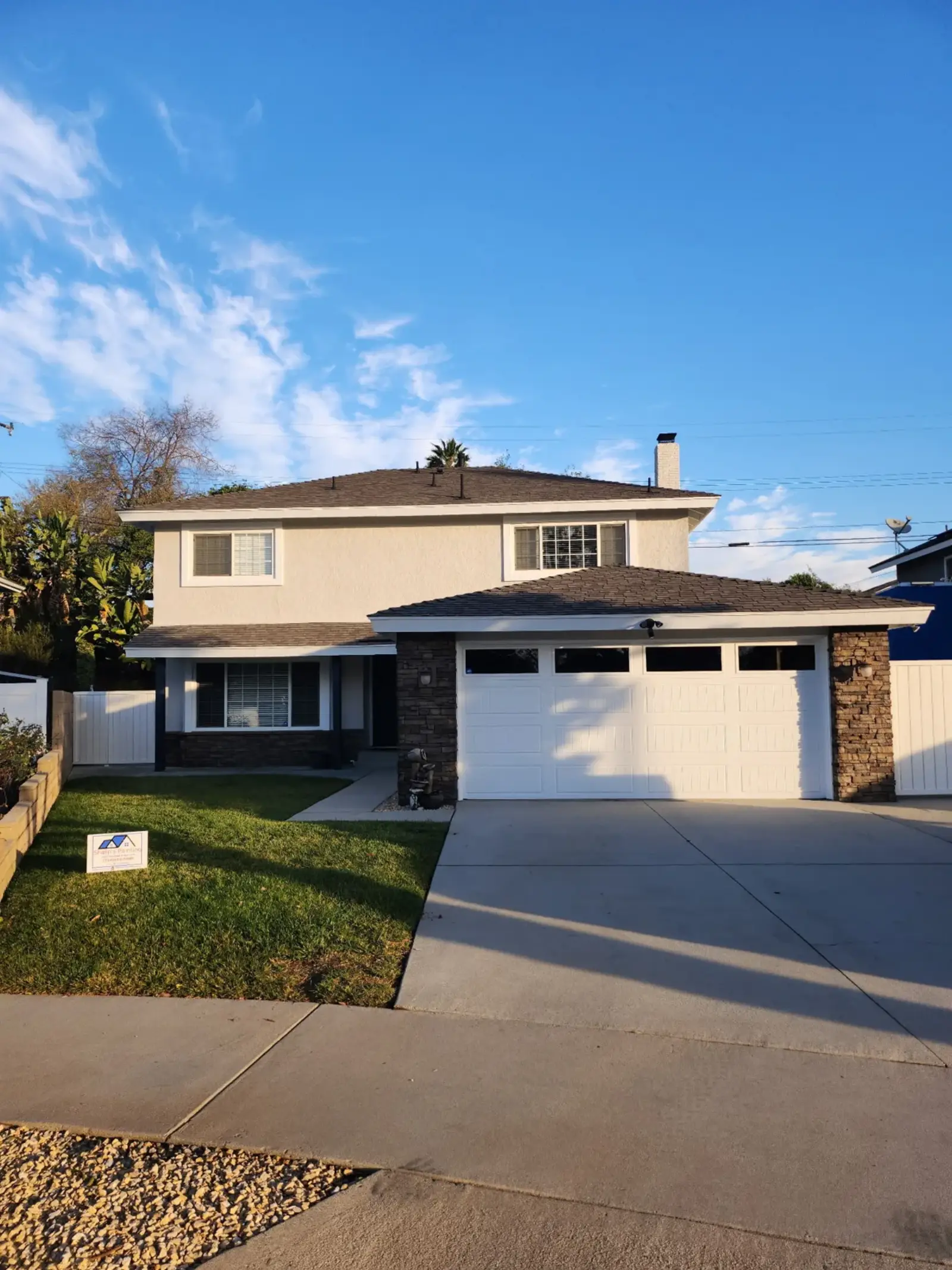
A repainted stucco exterior showing body, trim, and accent colors in their separate areas.
Reading a Scheme Sheet
Scheme sheets are compact and easy to misread. Most assign a handful of designations, and each one maps to specific parts of the house.
| Designation | Where it usually goes | Common mistake |
|---|---|---|
| Body | Stucco and siding, the largest surface area | Using the body color on garage doors too |
| Trim | Fascia, window surrounds, door casing, eaves | Assuming trim and accent are interchangeable |
| Accent | Front door, shutters, sometimes the garage door | Adding an accent the scheme does not include |
| Stain or natural | Wood elements meant to stay unpainted | Painting over wood the scheme wants stained |
The safest approach is to write out every exterior element on your home and assign it a designation before you submit. Garage doors, fascia, gutters, downspouts, security doors, patio covers, and fences all need a home on that list. Downspouts are commonly expected to match the body so they disappear against the wall, but that varies by community.
Sheen is worth confirming too. Many palettes specify sheen for body and trim, and a flat body with a satin trim reads very differently from everything in one sheen. If you are working with a coastal light color, the guide on choosing the right white for a coastal exterior explains how much undertone and sheen affect what you actually see outdoors.
The Submission Packet and Where a Painter Helps
A typical architectural application asks for the owner name and address, the scheme number or color names and codes, the surfaces being painted, the contractor performing the work, and a signature. Some associations request the contractor's license and insurance information. Some ask for photographs of the existing exterior.
Strengthen the packet with a few things that are not always required but almost always help:
- Physical color chips or brushed out samples labeled with body, trim, and accent.
- A photo of the front elevation with the designations noted.
- A short note describing any repair work that will change the look, such as stucco patching or wood replacement.
This is where a painting contractor earns their keep. A contractor who has submitted in your community before knows which forms the management company uses, what level of detail gets approved on the first pass, and which repairs need to be disclosed. Painted samples on your own wall also settle disagreements quickly, because the committee and the household are both looking at the same thing under the same light.
Timelines, Rejections, and Painting Without Approval
Review periods vary widely. Some committees meet monthly, some quarterly, and some review applications on a rolling basis. Call the management company and ask when the next meeting is and what the submission cutoff is for that meeting. That single phone call is the difference between painting this season and waiting for the next one.
Most rejections trace back to a short list of causes. An incomplete form. A scheme that duplicates a neighbor. Colors chosen from a retired palette. Missing detail on which surfaces get which color. Repair or material changes that were not disclosed. Every one of those is avoidable with a careful first submission.
Painting without approval is the expensive path. The association can require the home be repainted to an approved scheme at the owner's cost, which means paying twice for the same work and living through the process twice. No color is worth that. If you are already deep into planning an exterior repaint, the durability side of the decision is covered in the best exterior paint strategy for salt air and coastal sun in Orange County.
Coordinate approval with scheduling. Good exterior house painting crews book out, and coastal weather is friendlier to exterior work in some stretches than others. Submit early, hold a tentative start date with your contractor, and confirm once the approval letter arrives.
How Sharp's Painting Helps With HOA Submissions
Sharp's Painting works throughout Huntington Beach, Newport Beach, Irvine, Costa Mesa, Seal Beach, Corona del Mar, Yorba Linda, and Fullerton, much of it in communities with architectural review. Robert Sharp personally evaluates each project, runs his own crew rather than subcontracting, and is on site daily while the work is underway.
For owners going through HOA approval, we bring up to ten free paint samples so you can see the scheme colors on your own stucco before anything is submitted. The color consultation and estimate are free, on residential and commercial jobs alike. We are a licensed California C-33 contractor, license 1048840, bonded and insured, with over 27 years of painting experience here on the coast. There is no deposit and no upfront payment, and you pay only when the job is done right.
If you have a scheme in mind or a palette you are still sorting through, tell us about your project and Robert will get back to you.
FAQs
Do I need approval if I am repainting the exact same colors?
Usually yes. Many associations require an application even for a like for like repaint, because it documents that the work happened and confirms the colors still match a current scheme. It is a short form and it protects you if the palette changed since the last repaint.
Can I use a different paint brand than the one listed on the scheme sheet?
Many communities allow a color match as long as the final appearance matches the approved scheme, but this is set by your association, not by any general rule. Ask the management company directly and get the answer in writing with your approval.
How do I make an approved scheme feel like my own home?
Most of the personality lives in the accent and in the details. Front door color, the sheen combination, and how cleanly the trim lines are cut all change how a scheme reads. Crisp trim work and well prepped surfaces make a common palette look considered rather than default.
What if my home needs stucco or wood repair before painting?
Disclose it in the application. Repairs that change texture or replace visible wood can affect appearance, and committees want to know in advance. Sharp's Painting handles stucco painting and repair as part of exterior work, so the repair scope can be described in the packet from the start.
How far ahead should I submit my application?
Earlier than feels necessary. Committees meet on their own schedule, and painting crews book ahead, so submitting well before your preferred start date gives you room if the committee asks for a revision. Ask the management company for the next meeting date and the submission cutoff, then plan backward from there.