
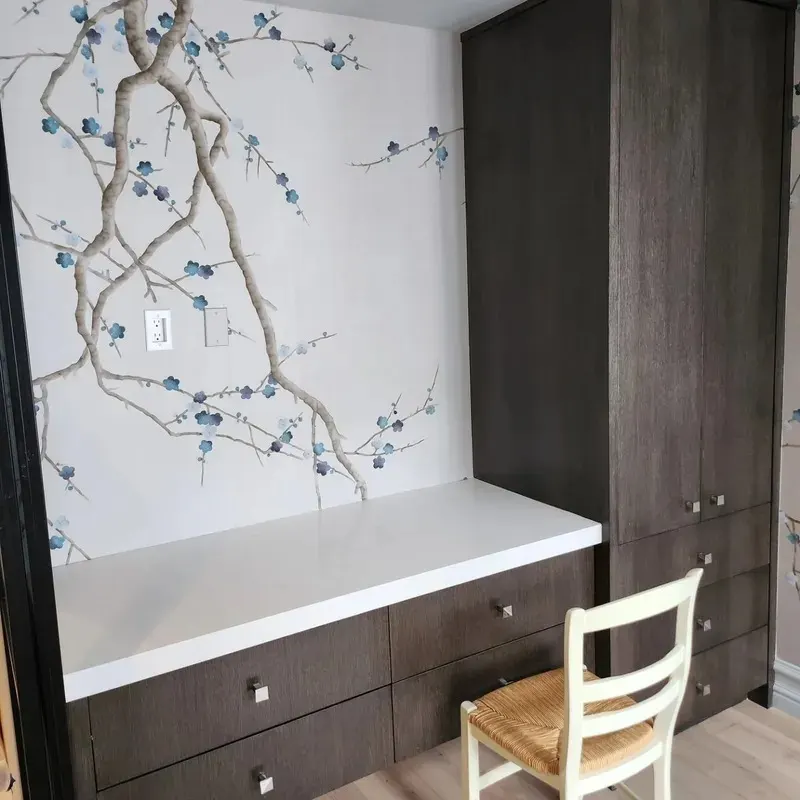
White is not one color, it is a huge family of tinted neutrals, and the right one depends on your light, your trim, and the surfaces you are not replacing. Most white paint disappointments come from judging a chip in a store instead of a brushed sample on the actual wall. The fix is simple, though it takes a little patience. Look at real samples, in your own rooms, across a full day.
Here's the short version:
- Every white has an undertone, usually warm yellow or beige, cool blue or gray, or something close to neutral.
- Light direction and coastal weather change how a white reads from morning to late afternoon.
- Fixed elements decide more than you think, so match whites to cabinets, counters, and flooring.
- Test big samples on several walls over several days before committing.
Why White Is the Hardest Color to Pick
That is where undertones come in. Think of a white as mostly white with a small amount of another color mixed in. Pull it toward yellow, cream, or beige and you get a warm white. Pull it toward blue, violet, or gray and you get a cool white. Leave the tint almost out and you get something closer to a true neutral, which can look crisp in one room and stark in another.
Warm whites, cool whites, and true neutrals
Warm whites soften a room. They tend to work well in spaces that get limited direct light, in rooms with wood floors or wood ceiling beams, and in homes where the furniture leans toward creams, tans, and natural fabrics. They also keep a north facing room from feeling cold.
Cool whites read cleaner and more modern. They pair naturally with gray tile, white quartz, black hardware, and cooler flooring. In a room that already gets strong warm afternoon light, a cool white can balance things nicely. In a dim room, the same white can turn gray and flat.
How Light Moves a White Through the Day
Light direction matters as much as the paint itself. South and west facing rooms get stronger, warmer light later in the day, which pushes any white warmer still. North facing rooms get softer, cooler light, which can mute a cool white into something gray. East facing rooms are bright early and quieter by afternoon, so a white there often looks like two different colors depending on when you walk in.
Along the coast there is another layer. A marine layer morning in Huntington Beach throws flat, gray, diffused light into a room, and that is when cool whites look their coldest and warm whites look their most balanced. By early afternoon the sky opens up, the light turns bright and sharp, and the same walls can swing noticeably warmer. A white that only looks right at one of those hours is the wrong white.
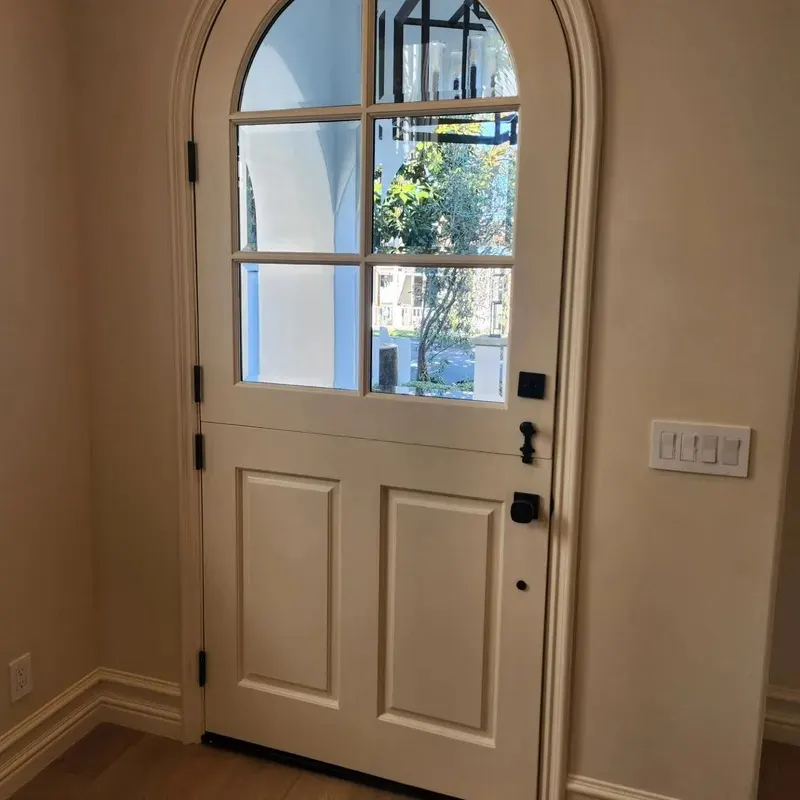
Brushed white samples on an interior wall, viewed in natural daylight.
Pairing Wall Whites With Trim, Ceilings, and Doors
The contrast question comes up on every job. Do you want the trim to stand apart from the walls, or do you want everything to blend into one quiet envelope?
A brighter, crisper white on baseboards, casings, crown, and doors gives you definition and makes the millwork read as architecture. A trim white in the same family as the wall white, just a step cleaner, gives you a calmer room where the walls do the talking. Both work. What rarely works is a warm wall white against a cool trim white, or the reverse, because the mismatch looks like a mistake rather than a choice. Sheen plays a role here as well, and if you are weighing that out, our guide to interior paint sheens room by room walks through where each finish belongs.
Clean lines matter more than the color choice once the paint goes on. Nail holes filled, gaps caulked, and a hand cut line where wall meets trim are what make two whites look intentional. That is the heart of Trim, Baseboard and Crown Molding Painting.
Ceilings are the easiest decision in the house. A bright, flat white usually wins. Flat hides the small waves, patches, and texture variations that every ceiling has, and it avoids the shine that makes a ceiling look low. A bright white also bounces light back down into the room, which matters in rooms with modest windows. If a ceiling is yellowed or stained, that gets addressed before paint rather than covered with another coat.
| Surface | Typical choice | Why |
|---|---|---|
| Walls | Warm, cool, or neutral white picked for the room's light | Largest surface, so undertone shows most |
| Trim and doors | A cleaner white in the same temperature family | Keeps the contrast readable, not accidental |
| Ceilings | Bright white, flat sheen | Hides texture, bounces light, avoids glare |
| Accent wall | A deeper shade or a different white | Adds depth without repainting the whole room |
Coordinating With Cabinets, Counters, and Floors
The surfaces you are keeping set the rules. A honey toned oak floor will warm every white in the room whether you want it to or not. A cool gray tile will do the opposite. Veined quartz and marble have their own undertones, and a wall white that fights the veining tends to look slightly off without anyone being able to say why.
Start with the fixed elements, identify whether they lean warm or cool, and choose whites that agree with them. If the kitchen cabinets are also getting refinished, that opens up more options, since the cabinet white and the wall white can be chosen together rather than one working around the other. That is a common pairing with Kitchen Cabinet Painting and a full Interior House Painting project.
Testing Properly, and the Mistakes Worth Avoiding
Small chips and small patches both lie. Brush large samples, put them on more than one wall in the room, and leave them up for several days so you see them in marine layer mornings, bright afternoons, and lamp light. Put samples next to the trim and near the floor, not floating in the middle of a wall. If you can, paint samples on white poster board as well so you can move them around the room.
The mistakes that lead to repainting are predictable:
- Choosing from a chip under store lighting, which is nothing like the light at home.
- Using one white everywhere without checking how it behaves in each room's light.
- Mixing a warm wall white with a cool trim white, or the reverse.
- Judging a sample at only one time of day.
- Picking a white that fights the floors, counters, or cabinets that are staying.
- Skipping prep, since a white wall shows every unfilled dent, crack, and texture mismatch more than any other color.
That last point deserves emphasis. White is the least forgiving color for surface flaws. Patching, sanding, and Texture Matching and Wall Finishes are what keep a fresh white wall from looking blotchy under raking afternoon light.
How Sharp's Painting Helps You Land on the Right White
Sharp's Painting is based in Huntington Beach and owner Robert Sharp has painted in coastal Orange County for over 27 years. On white selection, we do it the only way that actually works. Robert brings up to 10 free paint samples and brushes them onto your own walls so you see each one against your trim, your furniture, and your light before anything is ordered. The color consultation and the estimate are both free.
If you are ready to settle on whites for a room or the whole house, tell us about your project and Robert will get back to you, or call (714) 610-5880.
FAQs
Can I see a white on my actual wall before you paint?
Yes. Robert brushes real samples onto your walls so you see how each color looks in your own light before anything is ordered or the work begins. A chip under store lighting rarely reads the same on a wall, which is exactly why the samples go up first.
Does the color consultation cost anything?
No. Robert includes the color help as part of your free estimate, so you can settle on the right white without paying for the advice. He walks the rooms with you and helps you pick colors that work in your light before the crew starts.
Should the trim be a different white than the walls?
Often yes. Trim, baseboards, and crown are frequently done in their own color and sheen, and Robert cuts clean lines by hand so the break between wall and trim stays crisp. Whether you want high contrast or a subtle shift is a preference, and he will show you both against your existing millwork.
Do you fix wall damage before painting white?
That is standard on every interior job. The crew fills dents and nail holes, patches cracks, repairs damaged drywall, and matches the surrounding texture so the fix blends in once the wall is painted. White shows flaws more than most colors, so that work matters even more.
What sheen should a white ceiling be?
Flat is the usual choice. It hides texture and small imperfections and avoids the glare that makes a ceiling feel lower than it is. Robert can also freshen a stained or yellowed ceiling and cut a clean line where the ceiling meets the wall.