
Signs Your Huntington Beach Home Needs Exterior Repainting
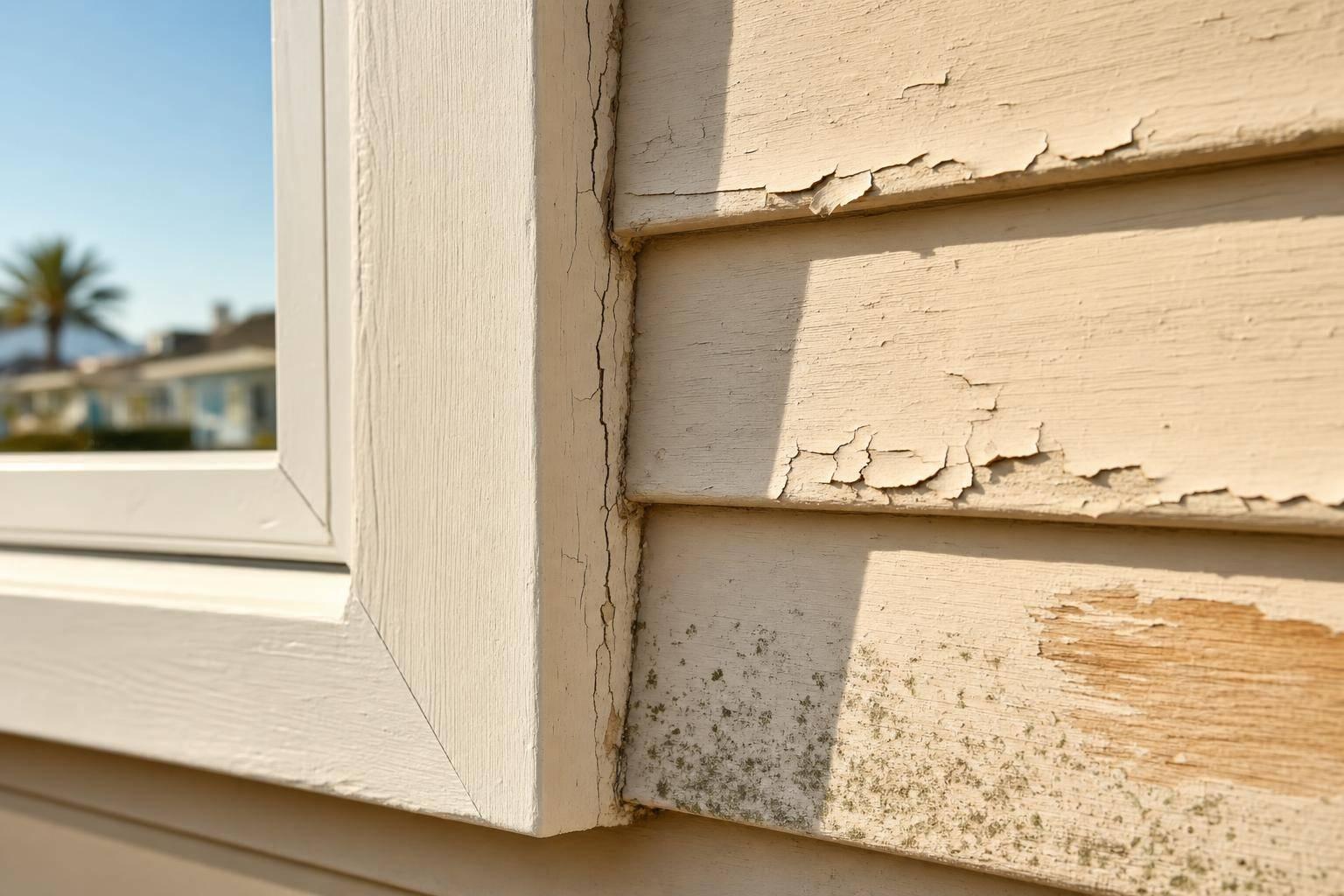
If your exterior paint is fading, chalking, peeling, cracking, or pulling away around joints, it may be time to repaint. In Huntington Beach, salt air, UV exposure, and moisture can wear paint down faster than many homeowners expect. The biggest warning signs usually show up first on sun-facing walls, trim, fascia, soffits, and around windows and doors.
Here’s the short version:
- Faded or patchy color can mean uneven wear
- Powdery residue on your hand points to paint breakdown
- Peeling, bubbling, or cracking means the coating is failing
- Open caulk joints let water get behind the paint
- Dark streaks or mildew can point to moisture trouble
- Bare wood, stucco cracks, or damaged trim need repair before paint
A full exterior paint job can cost $3,000 to $8,000+ for many U.S. homes, and repair costs can climb if bare wood or trim damage is left alone. Paint on coastal homes also tends to wear out sooner than in drier inland areas because repeated sun, salt, and damp air put more stress on the coating.
If you walk around your home and see these signs on more than one side, you may be past a simple touch-up. The main question is not just “Do I need new paint?” but also “What needs to be fixed first so the next coat lasts?”
| Sign | What it often means | What to do first |
|---|---|---|
| Fading or patchy color | Paint is wearing thin | Clean and inspect the area |
| Chalking | Binder is breaking down | Wash off residue before repainting |
| Peeling or flaking | Paint lost its bond | Scrape, sand, and prime |
| Bubbling or blistering | Moisture or heat under paint | Fix the source before repainting |
| Cracked caulk | Water can get into joints | Remove and recaulk |
| Mildew or dark streaks | Damp surface or drainage issue | Clean and dry the area |
| Bare wood or stucco cracks | Surface is exposed | Patch, seal, and prime |
Below, I break down the signs that matter most and how to tell whether you need spot repairs or a full repaint.
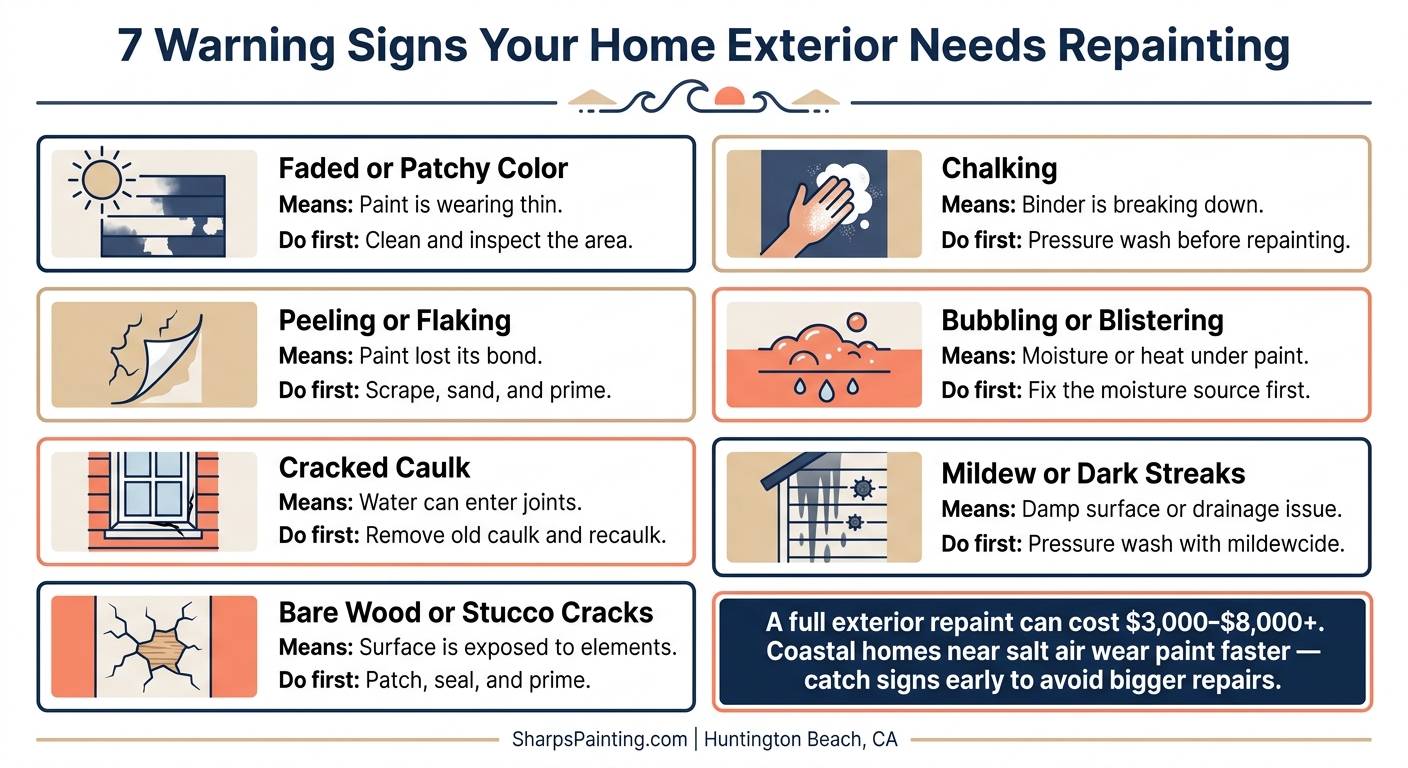
7 Warning Signs Your Home Exterior Needs Repainting
Your House Is Telling You It Needs Paint (Most Homeowners Miss This)
sbb-itb-ba1d7b9
Color Changes and Surface Residue That Signal Paint Breakdown
Fading and surface residue are often the first signs that exterior paint is starting to fail. As the coating wears down, it gets thinner. That leaves the material underneath more open to sun and moisture.
Faded or Patchy Color on Walls and Trim
Some fading is normal over time. But uneven fading is a red flag. Areas that get the most sun usually show it first, especially on sun-facing sides of the house.
Patchy color can mean the paint is wearing down at different rates. And that means some spots have less protection than others. If the faded areas also feel rough or chalky, the problem may be more than cosmetic. At that point, the coating may be wearing out.
Chalking When You Rub the Surface by Hand
Here’s a simple test: run your hand across an exterior wall and look at your palm. If you see a powdery white or gray residue, that’s chalking.
Chalking happens when the paint binder starts to break down after long exposure to the sun, leaving pigment behind on the surface. In plain English, the coating is losing its staying power.
Before repainting, clean off that residue so the new coat can bond the way it should. If chalking shows up along with peeling or cracking, the paint has moved beyond early wear and likely needs repainting.
Peeling, Bubbling, and Cracking That Show Coating Failure
After fading and chalking, the next red flags are physical paint failures. Peeling, bubbling, and cracking mean the coating has already broken down. If you paint over that damage without doing the prep work, you trap moisture and give the new coat a weak base.
Peeling and Flaking That Expose the Surface Below
Peeling and flaking mean the paint has lost its grip on the surface underneath. At that point, a new coat won't fix the issue on its own.
You need to scrape away loose paint, sand the edges until they're smooth and sound, and prime the area before repainting. That step matters. Without it, the new paint can fail in the same spots.
Bubbling and Blistering Linked to Moisture or Heat
Bubbles and blisters are signs that the paint is lifting because of trapped moisture or heat stress. It might look like a surface problem, but the cause usually sits underneath.
Fix the source first. If you skip that part, the blistering will come right back.
Cracking and Alligatoring in Older Paint Layers
Cracking shows that the paint has turned brittle and can no longer move with the house. Alligatoring is a later stage of that same problem, where the surface starts to split into a rough pattern.
When you see alligatoring, the surface needs full prep before repainting.
If the damage has reached caulk joints, trim, or bare wood, the issue has moved past the paint film.
Caulk Gaps, Mildew, and Exposed Materials That Need Repair Before Repainting
When cracking spreads to joints or reaches the surface underneath, paint by itself won't fix the problem. Before you repaint, take a close look at the joints, stains, and any material showing beneath the old coat. If the surface has gaps, moisture marks, or damage, the new paint job likely won't hold up for long. Prep work matters just as much as the finish.
Cracked Caulk and Open Joints Around Windows, Doors, and Trim
Caulk seals the joints between siding, trim, windows, and doors. When that seal breaks down, moisture can slip in.
Look around windows, doors, and trim for:
- Brittle caulk
- Visible gaps
- Spots where the seal has pulled away
If the caulk has failed, fix it before new paint goes on.
Mildew, Dark Streaks, and Areas That Stay Damp
Dark streaks can point to mildew or trapped moisture. Clean those areas first, then let them dry all the way before repainting.
If one spot stays damp after rain or keeps showing signs of moisture, deal with that issue first. Painting over it is like putting a bandage over a leak. It may look better for a bit, but the problem is still there.
Stucco Cracks, Bare Wood, and Damaged Trim
Stucco cracks and exposed wood need repair before painting. Open cracks can let water reach the surface below, and damaged trim can weaken the paint around the edges of the house.
Any exposed material should be patched, sealed, or repaired before painting. In most cases, a proper repaint starts with washing, crack repair, recaulking, and priming bare areas.
Use these problem spots as your final walk-around before you decide it's time to repaint.
How to Decide When Repainting Is the Right Next Step
Use the warning signs above to figure out whether the damage is limited to one area or showing up across the house. A couple of small worn spots may only need a touch-up. But when you see fading, chalking, peeling, and failed caulk on several sides, it usually points to a full repaint.
A Walk-Around Checklist for Homeowners
Start with the south- and west-facing sides of the house. These areas take the most direct sun, so UV wear often shows up there first. Run your hand across the siding. If it leaves a powdery residue on your palm, the paint binder has broken down. After that, check the shaded sides for dark streaks or damp patches that don't seem to dry out.
Then look under windows and along the fascia and soffits. Water runoff tends to collect in these spots, which makes them common trouble areas for bubbling, peeling, and even wood rot. Last, step back and look at the house as a whole. Is the problem limited to one section, or do you see the same pattern on several walls?
This walk-around helps you tell the difference between a job that needs a few spot repairs and one that calls for a full repaint.
| Visible Sign | Where to Inspect | Preparation or Repair Before Repainting |
|---|---|---|
| Faded or Patchy Color | South- and west-facing walls | Thorough cleaning and high-quality primer |
| Chalking or Powdery Residue | Siding and trim surfaces | Pressure washing to remove all loose powder |
| Peeling or Flaking | Wood trim, siding, and areas near the ground | Scraping, sanding, and spot priming |
| Bubbling or Blistering | Near joints and areas with poor ventilation | Find and fix the moisture source, scrape, and dry |
| Cracked Caulk or Open Joints | Around windows, doors, and trim corners | Remove old caulk and apply exterior caulk |
| Mildew or Dark Streaks | Shaded walls and north-facing elevations | Pressure wash with a mildewcide solution and ensure the area is completely dry |
| Exposed Stucco or Bare Wood | Lower wall sections, corners, and damaged trim | Patch stucco cracks or replace rotted wood before priming and painting |
Conclusion: Signs to Act on Before Damage Spreads
When several warning signs show up at the same time, the house needs more than another coat of paint. Cleaning, patching, sealing, and priming are the steps that help a repaint last. Skip them, and the new coat usually won't hold up much longer than the old one.
Sharp's Painting in Huntington Beach can inspect the home and explain the prep work needed before repainting. If the damage is showing up in many areas, schedule a repainting assessment before it spreads.
FAQs
How often should a coastal home be repainted?
The information here doesn’t say how often a coastal home should be repainted.
If you want a maintenance schedule that fits your home, it’s best to have a professional contractor inspect the exterior surfaces. A local company such as Sharp's Painting in Huntington Beach can look at the condition of the paint, the materials on your home, and the wear caused by the coastal climate.
Can I repaint over peeling or chalky paint?
No. Don’t paint straight over peeling or chalky surfaces. The new paint won’t stick well, and it can bubble or flake before long.
If you want the finish to last, the surface needs to be cleaned and prepped first. That means removing loose paint and any chalky residue so the new coat has a solid surface to bond to.
Sharp's Painting can inspect your exterior and take care of the prep the right way.
Do I need repairs before exterior repainting?
Yes. Before exterior repainting, check the surface for repairs. If you paint over damage, the new coat can peel or wear out too soon.
Sharp's Painting recommends fixing problems like wood rot, loose siding, and damaged trim first. That prep work helps the paint last longer and gives the home a clean, professional look.