
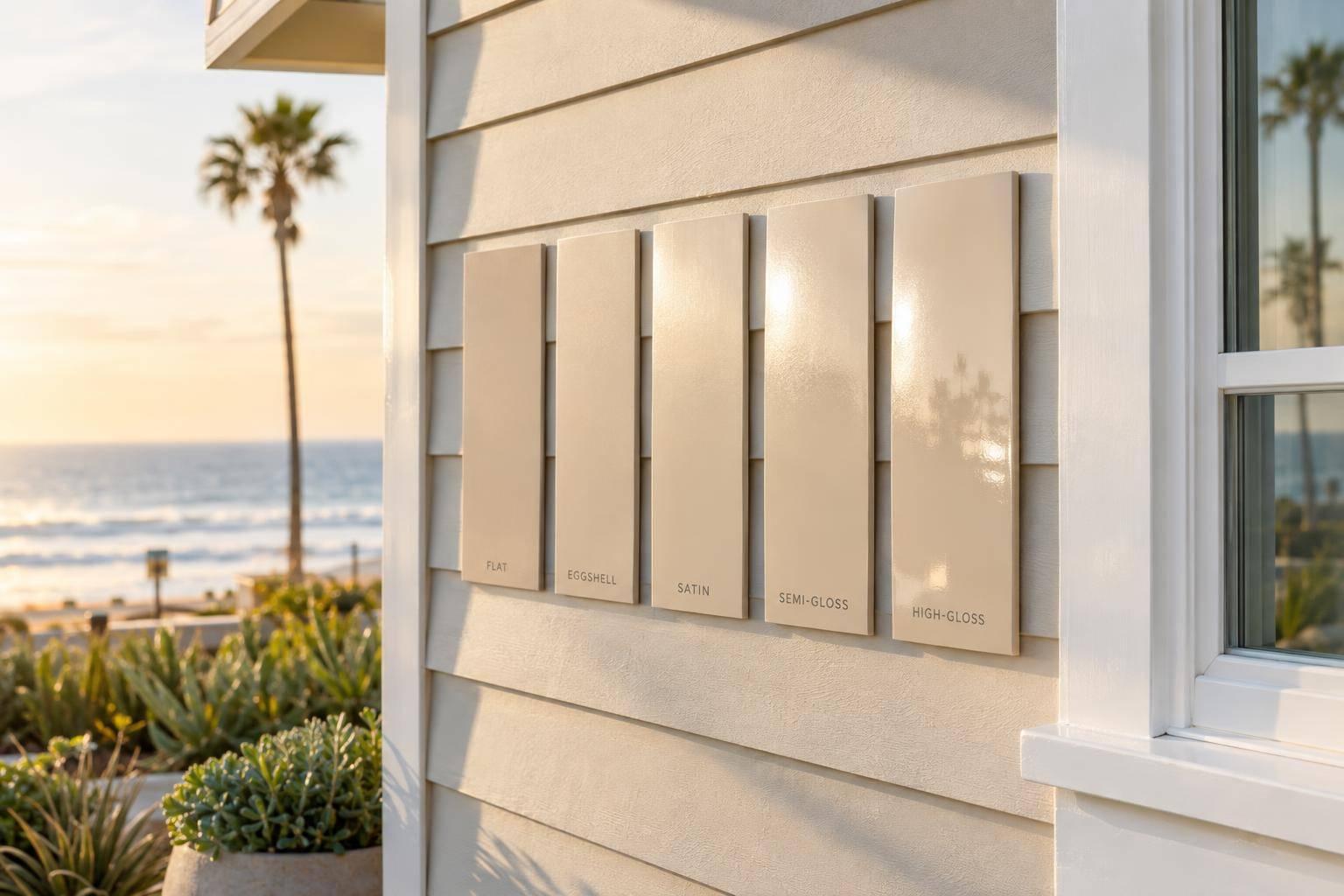
Choosing Paint Sheens for Coastal Homes in Huntington Beach
I choose paint sheen by surface, cleaning needs, and exposure - not shine alone. For a Huntington Beach home, I start with these 5 finish options:
- Flat or matte: Ceilings, low-traffic rooms, and textured stucco.
- Eggshell: Living rooms, guest bedrooms, and offices.
- Satin: Busy walls, doors, cabinets, and wood siding.
- Semi-gloss: Bathrooms, laundry rooms, and high-touch trim.
- Gloss: Smooth cabinets, trim, and accents where you want more shine.
The trade-off? More shine usually means easier cleaning, but it also shows more dents and repair marks. Sheen alone doesn’t determine durability.
Before painting, I check coating suitability, remove salt and loose paint, repair damage, and follow the product’s weather and drying limits. Then I <u>test the finish in your home’s light</u> - including sun, coastal haze, and shade outside. In damp rooms, I address moisture and ventilation first.
Interior Sheens by Room and Surface
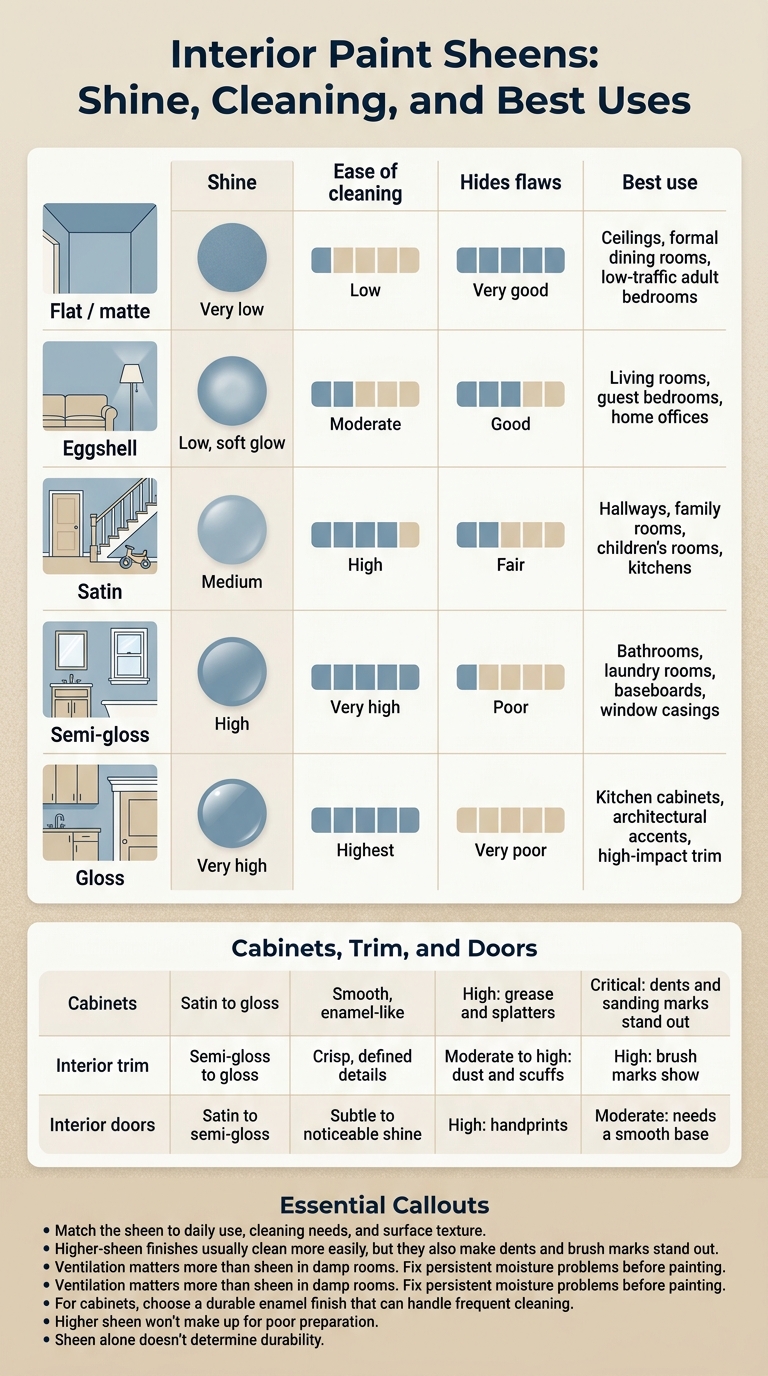
Interior Paint Sheens: Shine, Cleaning, and Best Uses
No single sheen works for every interior surface. Ceilings get little contact, while cabinet fronts collect grease and fingerprints. Match the sheen to daily use, cleaning needs, and surface texture.
The chart below shows where each sheen works best.
Flat, Eggshell, Satin, Semi-Gloss, and Gloss Compared
Use these recommendations as a guide. Higher-sheen finishes usually clean more easily, but they also make dents and brush marks stand out.
| Sheen | Shine | Ease of cleaning | Hides flaws | Best use |
|---|---|---|---|---|
| Flat / matte | Very low | Low | Very good | Ceilings, formal dining rooms, low-traffic adult bedrooms |
| Eggshell | Low, soft glow | Moderate | Good | Living rooms, guest bedrooms, home offices |
| Satin | Medium | High | Fair | Hallways, family rooms, children's rooms, kitchens |
| Semi-gloss | High | Very high | Poor | Bathrooms, laundry rooms, baseboards, window casings |
| Gloss | Very high | Highest | Very poor | Kitchen cabinets, architectural accents, high-impact trim |
Choose Wall and Ceiling Sheens by Room Use
Flat or matte works well on ceilings and in formal dining rooms or low-traffic adult bedrooms. Choose eggshell for living rooms, guest bedrooms, and home offices. Satin suits hallways, family rooms, kitchens, and children's rooms, where fingerprints and scuffs are more common.
Semi-gloss works well in bathrooms and laundry rooms, where easy cleaning and moisture resistance matter more. But ventilation matters more than sheen in damp rooms. Fix persistent moisture problems before painting.
Choose Sheens for Cabinets, Trim, and Doors
High-touch surfaces need tougher finishes and smooth preparation.
For cabinets, choose a durable enamel finish that can handle frequent cleaning. Satin gives a softer look, semi-gloss adds definition, and gloss reflects the most light. Before painting, remove and label the hardware, clean off grease, sand, and prime as needed. Higher sheen won't make up for poor preparation.
| Surface | Suitable sheen range | Appearance | Cleaning needs | Preparation sensitivity |
|---|---|---|---|---|
| Cabinets | Satin to gloss | Smooth, enamel-like | High: grease and splatters | Critical: dents and sanding marks stand out |
| Interior trim | Semi-gloss to gloss | Crisp, defined details | Moderate to high: dust and scuffs | High: brush marks show |
| Interior doors | Satin to semi-gloss | Subtle to noticeable shine | High: handprints | Moderate: needs a smooth base |
sbb-itb-ba1d7b9
Exterior Sheens by Surface
Outdoors, surface material and exposure matter more than room use. Choose sheen for the material first, then account for Huntington Beach's sun, salt air, and moisture. More reflective finishes make patches and texture easier to see. Use the ranges below only if the coating is approved for the surface.
| Surface type | Suitable sheen range | Primary benefit | Key caution |
|---|---|---|---|
| Stucco and textured masonry | Flat to low-sheen | Cuts glare and hides surface flaws | Confirm the coating is suitable for masonry and meets breathability requirements |
| Wood siding | Satin or low-luster | Balances durability with a smooth, classic look | Make sure the product allows for wood expansion and contraction in coastal air |
| Trim, fascia, shutters, and doors | Semi-gloss to gloss | Defines details and makes cleaning easier | Repair damaged wood before painting |
| Garage doors and exterior metal | Satin to semi-gloss for garage doors; semi-gloss to gloss for exterior metal | Makes cleaning and frequent handling easier with a coating suited to the surface | Check coating compatibility and required preparation |
Start with the wall material, then narrow your choice based on texture and exposure.
Stucco and Textured Masonry
Match repairs to the surrounding texture before painting. Use a masonry-approved coating that meets the surface's breathability requirements.
Siding, Trim, Fascia, and Shutters
Let the surface condition guide your finish choice. Repair rot or hidden water damage first, then use sheen to set off trim, fascia, shutters, and doors.
Garage Doors and Exterior Metal
A higher sheen can work well where handling, cleaning, and weather resistance matter most - as long as the coating suits the surface.
Check the existing finish, surface condition, and sun exposure before selecting sheen. Confirm coating compatibility and the preparation needed for coastal exposure and frequent handling. Choose a less reflective finish for dented panels, and avoid dark colors on sun-exposed metal because they absorb a lot of heat.
Coastal Surface Preparation and Sheen Testing
Once you choose a sheen, prep and test it under coastal conditions before painting.
Clean and Repair Surfaces Before Painting
Remove salt, dust, and chalk. Wash off mildew or algae with a mildew cleaner or detergent wash. Adjust the washing pressure to suit the material - high pressure can etch soft wood or push water behind siding.
Repair hidden damage before you paint. Scrape off loose paint, sand uneven edges, patch cracks and holes, and caulk joints where appropriate. Choose a primer that works with both the prepared surface and the finish coat. This prep helps the finish bond evenly in salt air.
Check Exposure and Painting Conditions
Paint only when the surface meets the product’s dry-time and humidity limits. Make sure it’s fully dry after washing or exposure to marine-layer moisture. Follow the manufacturer’s temperature, humidity, drying, and recoat requirements. A surface that looks dry isn’t enough, and neither is a fixed waiting period after washing.
For a Sharp’s Painting project, confirm the right primer, finish, and weather window for each surface.
Once the surface is dry and the weather window is right, test the sheen before committing.
Test Sheen in Your Home's Lighting
Apply the finish to the prepared surface or a matching sample board. View interior samples in daylight and household lighting. Check exterior samples in direct sun, coastal haze, and shade.
Look at each sample from different angles. Check glare, how much repairs show, and contrast between surfaces - not just color.
Conclusion: Your Paint Sheen Checklist
Choose flat or matte for low-reflection areas, eggshell for general walls, satin for washable surfaces, semi-gloss for moisture-prone or high-touch areas, and gloss for accents.
Before painting, check five things: surface and exposure, coating suitability, surface preparation, application conditions, and sample approval. Identify the material and what it’s exposed to. Confirm that the coating suits the surface, finish the prep, and check the application conditions. Then approve the sample in your home’s lighting.
Sheen affects appearance. Coating and prep determine performance. In Huntington Beach, choose a sheen that fits the surface, its exposure, and the prep.
FAQs
Can I change paint sheen without stripping old paint?
You usually don’t need to strip old paint to change the sheen. But you do need to prep the surface so the new coat sticks.
Clean the surface thoroughly to remove dirt, mildew, and chalky residue. Once it’s clean and properly primed, you can paint over the existing coat with a new sheen.
Contact Sharp's Painting for professional guidance on your specific project.
Why do touch-ups look shinier than my walls?
Touch-ups often look shinier because new paint reflects light differently than the older finish. Cleaning, sunlight, and everyday wear dull wall paint over time, making the sheen of new paint stand out.
At Sharp's Painting, we pay close attention to these differences to help touch-ups blend with the existing finish in your Huntington Beach home.
Can washable matte paint work in busy rooms?
Yes, washable matte paint can work in busy rooms. The key is cleaning and prepping the surface so the finish sticks well. In Huntington Beach homes, that means washing, scraping, sanding, making repairs, caulking, and priming. These steps help the paint look good longer, even with everyday wear.